
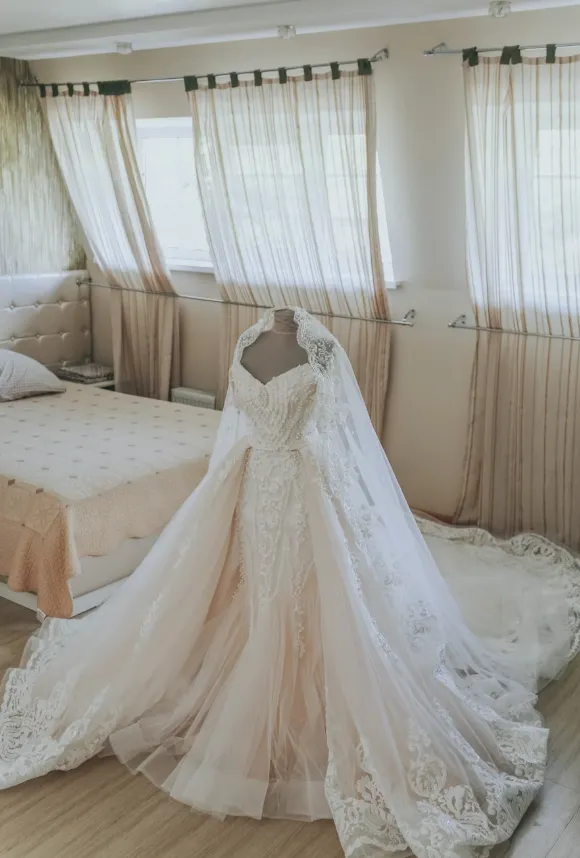
How to Prepare Your Wedding Dress for Professional Cleaning and Storage
Your wedding dress may hold memories you’ll want to revisit for years. After the celebration, it can also carry marks from the day: a dusty hem, makeup, food, or a spill that went unnoticed during the event. Preparing the gown for professional cleaning and storage can help you make informed choices about its care.
Every dress is different. Fabric, construction, embellishments, and the care label all affect what cleaning and storage methods are suitable. A professional cleaner can assess the gown and explain the options, but a few simple steps before drop-off can make that conversation more useful.
1. Check the Care Label and Garment Details
Before taking any action, look for the care label. It may be attached inside the dress, often near a side seam or in the bodice. Note any instructions and share them with the cleaner.
Wedding dresses may be made from silk, satin, lace, tulle, chiffon, or a combination of materials. They may also include beads, sequins, embroidery, boning, layered skirts, or delicate fastenings. These details can affect how the dress should be handled.
If the label is missing or unclear, don’t try to guess at a cleaning method. Tell the cleaner what you know about the gown, including its approximate age, fabric if known, and any alterations or repairs.
2. Inspect the Dress After the Wedding
As soon as it’s practical, look over the gown in good lighting. Check the hem, train, neckline, underarms, cuffs, and areas around closures. Look for visible marks, loose threads, missing beads, snags, and other changes.
Some stains may be difficult to see at first. Clear liquids, perspiration, and small food or drink marks may become more noticeable later. Make a note of anything you spot, but avoid rubbing, scraping, or trying to remove it yourself.
If the dress has a long train, check the underside as well. The hem may have picked up dirt from the ground, even if the front of the dress still looks clean.
3. Record What Happened to Any Stains
If you know what caused a stain, write it down. Details such as wine, makeup, food, grass, or oil can help the cleaner assess the mark. Include roughly when it happened and whether anyone tried to treat it.
If you don’t know what caused a stain, say so. It’s better to be clear than to guess. If someone applied water, stain remover, soap, or another product, let the cleaner know what was used and where.
Avoid using a home stain remover or scrubbing the fabric before drop-off. Wedding dresses can have delicate fibres and finishes, and vigorous treatment may spread a stain or affect the material. Heat from an iron or dryer can also make some stains more difficult to address.
4. Handle the Gown Carefully Before Drop-Off
Until you can arrange professional assessment, handle the dress with clean hands and keep it away from food, pets, smoke, moisture, and direct sunlight. Avoid hanging a heavy gown by thin straps, especially if it has a full skirt, a long train, or substantial embellishments. The weight may put strain on the shoulders.
For transport, ask the cleaner how they prefer the gown to be brought in. If you need to carry it yourself, use a clean garment bag that provides enough room and doesn’t crush the skirt. Avoid folding the dress tightly or placing other items on top of it.
If the gown has detachable elements, such as a belt, overskirt, removable sleeves, or a veil, keep them with the dress and identify each piece. Ask whether those accessories can also be assessed and cleaned.
5. Talk With the Cleaner Before Cleaning Begins
At drop-off, explain the gown’s fabric and construction as far as you know. Point out each stain or area of concern. If the dress has sentimental or monetary value, mention that too so you can discuss the appropriate handling and expectations.
Useful questions include:
Can you assess this fabric and its embellishments?
Which areas may need special attention?
What results are realistic for the stains?
Are there risks associated with cleaning this gown?
How long might the service take?
What storage options or instructions do you recommend?
Professional cleaning cannot guarantee that every stain will disappear. Some marks may have changed the fabric, especially if they have been present for a long time or were treated at home. Ask the cleaner to explain any limitations before proceeding.
6. Ask About Cleaning and Storage Options
Once the gown has been assessed, ask what cleaning approach is recommended and what storage options are available. The right choice depends on the dress’s materials, construction, condition, and your plans for it.
If you hope to preserve the dress for a long time, ask about packaging and storage recommendations. Avoid assuming that a plastic garment bag is suitable for long-term storage. Some materials may need a different kind of protection and a stable storage environment.
If you plan to wear, sell, donate, or alter the dress later, tell the cleaner. That may help shape the discussion about cleaning and care. You can also ask whether alterations or repairs are available if the gown needs attention beyond cleaning.
7. Check the Dress at Pickup
When the gown is ready, inspect it before leaving the shop. Check the areas you discussed, the hem and train, and any detachable pieces. If you have questions about a remaining stain or a repair, raise them at pickup.
Ask for any care or storage instructions in writing if available. Keep those instructions with the gown so you can refer to them later. Avoid opening or repackaging the dress unnecessarily if it has been prepared for storage.
8. Choose a Suitable Storage Location
After cleaning, store the dress somewhere cool, dry, and away from direct sunlight. Avoid damp basements, hot attics, and areas with large temperature changes. Keep the gown away from strong odours and sources of moisture.
Check the storage container periodically, following the cleaner’s instructions. If the dress is in a box, make sure the location is dry and protected from pests. If it is stored hanging, ensure the support is appropriate for the gown’s weight and construction.
Professional Wedding Dress Care in Carleton Place
Carleton Cleaners lists bridal gowns among its services, alongside dry cleaning, alterations and repairs, and care for other specialty items. The business is located at 27 Bridge Street in Carleton Place. Contact the cleaner directly to confirm current service availability, discuss your gown’s fabric and condition, and ask about turnaround and storage recommendations.
Preparing your wedding dress starts with careful inspection and clear communication. Note stains, avoid home treatments, and ask questions before cleaning begins. With a professional assessment and suitable storage guidance, you can make a considered plan for caring for a dress that means a great deal to you.